
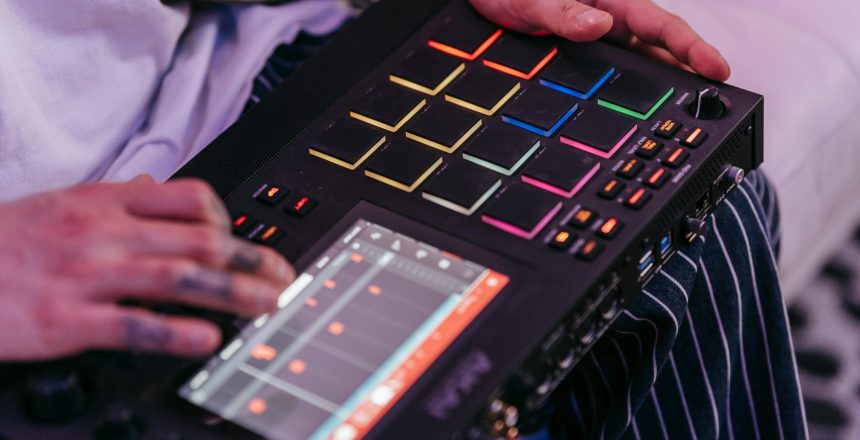
If you’ve ever wondered how to begin producing music, you’re in the right place. Becoming a music producer doesn’t require expensive gear or a professional studio from day one — it starts with understanding the essential tools, developing your skills, and building your creative workflow.
Let’s break down the essential equipment and software you need to start producing music in 2025 — even from your bedroom.
Understanding the Basics of Music Production
Before diving into gear, it’s important to grasp the stages of music production — from idea creation to mastering. Each step helps shape your sound and teaches you how to make professional-quality tracks.
These stages typically include:
- Songwriting or beat creation
- Recording instruments or vocals
- Editing and arranging
- Mixing
- Mastering and final output
Once you’re familiar with the process, you can start collecting the essential gear to bring your ideas to life.
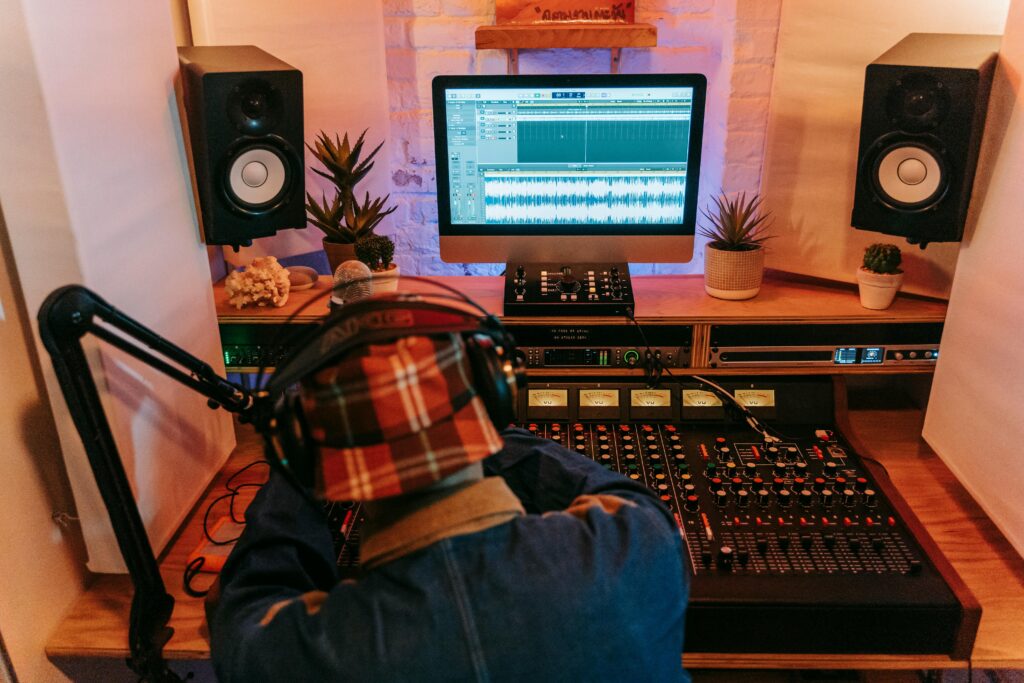
Essential Equipment to Begin Producing Music
1. Start with a Reliable Computer for Music Production
Every beginner wondering how to begin producing music needs a capable computer. Your computer is the heart of your production setup, handling everything from recording to mixing.
While high-end models like the MacBook Pro are ideal, you don’t need to spend a fortune. Many successful producers began making music on second-hand laptops. As long as your system can handle your chosen DAW (Digital Audio Workstation), you’re good to go.
Tip: Focus on RAM (at least 16GB) and storage speed (SSD preferred) for smooth performance.
2. Choose the Right Digital Audio Workstation (DAW)
Selecting a DAW is one of the most important steps when learning how to start producing music. Your DAW is the software where you’ll compose, record, and arrange your tracks.
Popular options include:
- Ableton Live — ideal for electronic and live performers
- FL Studio — great for beginners and beat makers
- Logic Pro — professional and Mac-exclusive
- Pro Tools — industry-standard for recording studios
Experiment with trial versions before committing — your workflow will often depend on which interface feels most intuitive.
3. Do You Need a MIDI Controller to Produce Music?
A MIDI controller connects your creativity directly to your computer. While not mandatory, it greatly enhances your workflow. It allows you to play melodies, chords, and beats naturally instead of clicking notes into the software.
Popular beginner-friendly MIDI controllers include:
- Akai MPK Mini — compact and budget-friendly
- Arturia KeyLab Essential — high-quality keys and knobs
- Novation Launchkey — ideal for Ableton users
Adding a MIDI controller is one of the best upgrades when you’re learning how to begin producing music.
4. Invest in a Studio-Grade Microphone
A studio microphone is essential if you plan to record vocals or instruments. It’s the backbone of any home studio and helps capture clean, detailed audio.
Types of microphones to consider:
- Condenser microphones — great for vocals and acoustic instruments
- Dynamic microphones — ideal for louder sources like drums or amplifiers
When you start producing music, invest in a reliable mic like the Audio-Technica AT2020 or Shure SM7B, depending on your budget.
5. Get Professional Studio Headphones
Every successful producer will tell you that studio headphones are non-negotiable. They help you detect subtle imperfections in your mix that regular headphones or speakers can’t.
Look for flat frequency response headphones that give an accurate sound, such as:
- Audio-Technica ATH-M50x
- Beyerdynamic DT 770 Pro
- Sony MDR-7506
When producing for DJs or clubs, test your music on multiple systems — car, earbuds, and speakers — to ensure consistency across all environments.
Additional Gear for Beginners in Music Production
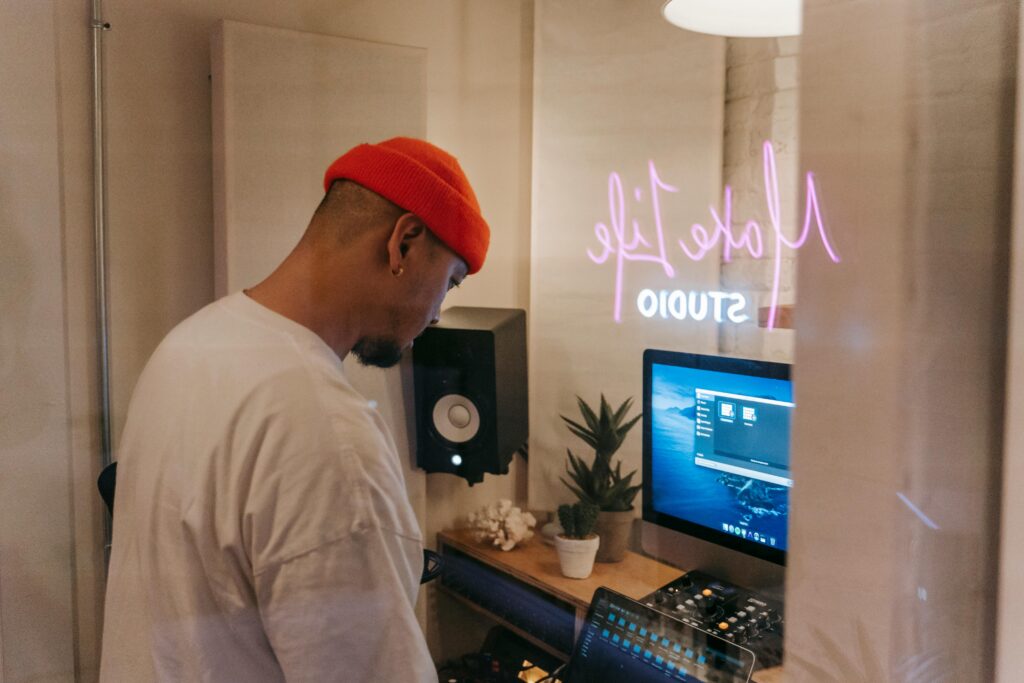
Once you’ve got the basics, you can expand your setup with gear that enhances creativity and workflow.
Audio Interface
Connect microphones and instruments to your computer for higher-quality recordings. Examples: Focusrite Scarlett 2i2 or Universal Audio Volt 2.
Studio Monitors
Accurate speakers like Yamaha HS5 or KRK Rokit 5 help you hear your music clearly while mixing.
Acoustic Treatment
Even simple foam panels or bass traps can drastically improve the sound quality of your room — ensuring accurate mixing results.
How to Begin Producing Music on a Budget
You don’t need a massive budget to start producing music. Many top producers began with minimal setups and gradually upgraded.
Here’s how to make the most of a small budget:
- Start with free DAWs like Cakewalk or GarageBand
- Use free VST plugins and sample packs
- Buy second-hand gear from trusted sites like Reverb or eBay
- Prioritize upgrading one item at a time
The key is consistency — not cost. Learn your tools deeply before upgrading.
Developing Your Skills as a Music Producer
Learning how to begin producing music involves more than buying equipment — it’s about building your craft.
- Watch YouTube tutorials from other producers
- Practice recreating songs you admire
- Join online producer communities (Reddit, Discord, or Facebook groups)
- Collaborate with vocalists or instrumentalists
Producing regularly will improve your mixing ear, creativity, and technical understanding.
Final Thoughts: How to Begin Producing Music Successfully
Starting your journey in music production can feel overwhelming at first, but it’s easier than you think. Focus on getting the essentials — a good computer, DAW, headphones, and microphone — then gradually expand.
With passion, patience, and practice, you’ll soon be creating professional-level tracks that reflect your artistic vision.
FAQs About How to Begin Producing Music
1. What do I need to start producing music at home?
You’ll need a computer, DAW, headphones, microphone, and optionally a MIDI controller or audio interface.
2. Is producing music expensive?
It doesn’t have to be. Many free DAWs, plugins, and affordable second-hand gear options can help you start on a small budget.
3. Do I need to play an instrument to produce music?
No — though it helps. Modern DAWs and MIDI controllers make it easy to create melodies without traditional instruments.
4. How long does it take to learn music production?
It varies. Some people start producing solid tracks within a few months of consistent learning and practice.
5. Which DAW is best for beginners?
FL Studio and Ableton Live are the most beginner-friendly DAWs for new producers.